Creative Travel
Exploring Global Crafts & Cultural Traditions

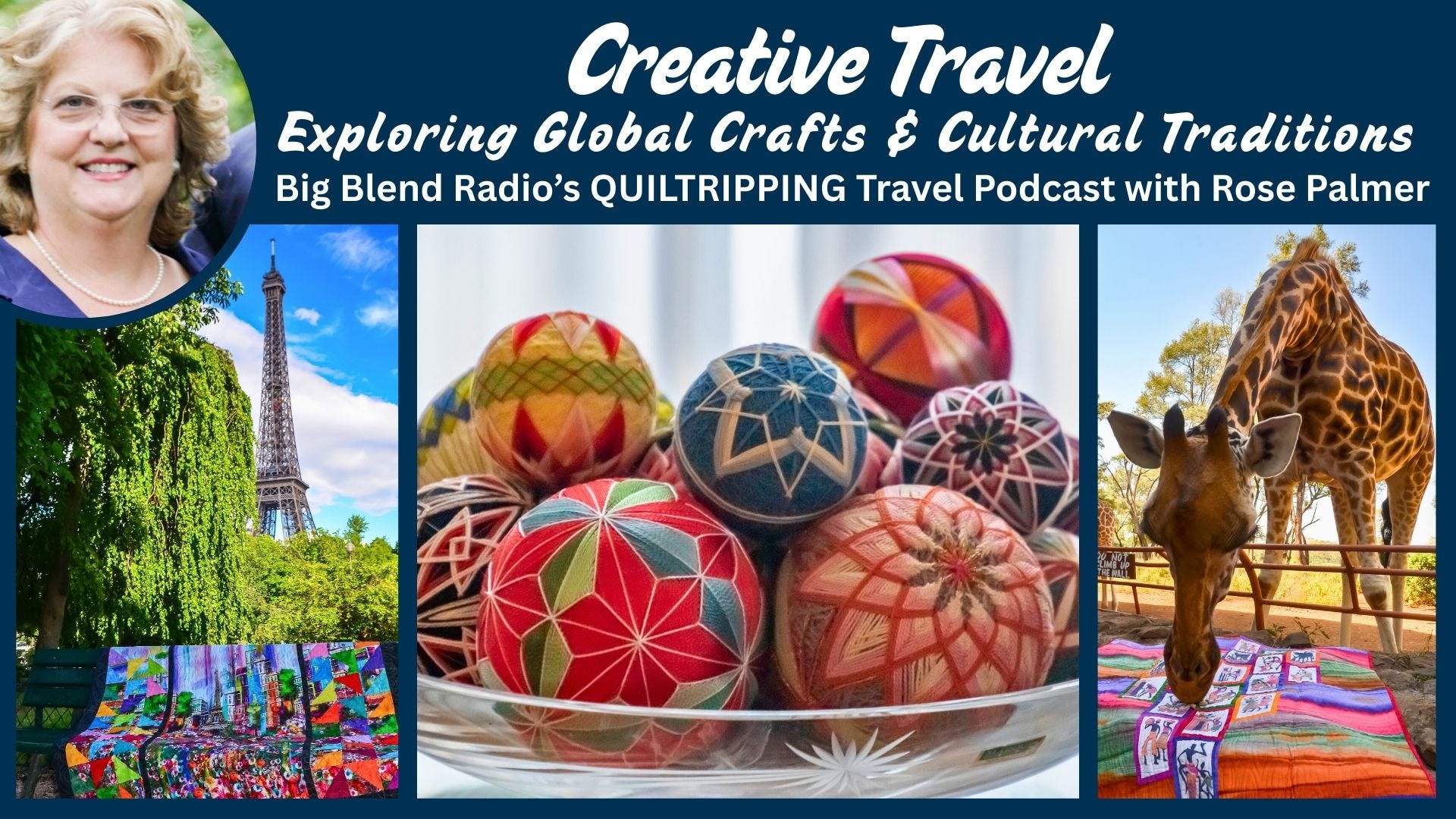
How does travel inspire creativity? In this episode of Big Blend Radio’s Quiltripping Travel with Rose Podcast, travel writer, photographer, and quilt designer Rose Palmer explores the fascinating connection between travel, crafts, and culture. From quilting and global textile traditions to craft retreats and creative communities around the world, Rose shares how exploring new places can spark artistic inspiration and meaningful cultural connections.
Listen to the podcast below, then scroll down to read Rose’s article for even more insight into how travel, creativity, and cultural traditions come together through the world of crafts.
COMBING TRAVEL WITH HOBBIES
By Rose Palmer
With my website, Quiltripping.com, I share my three major passions: travel, photography, and quilting. I’ve traveled extensively around the world and had numerous opportunities to capture many amazing photos. Whenever possible, I also indulge in my quilting hobby or other textile crafts during my travels. It doesn’t happen often, but whenever I can combine travel, photography, and quilting, it’s the perfect trifecta experience.
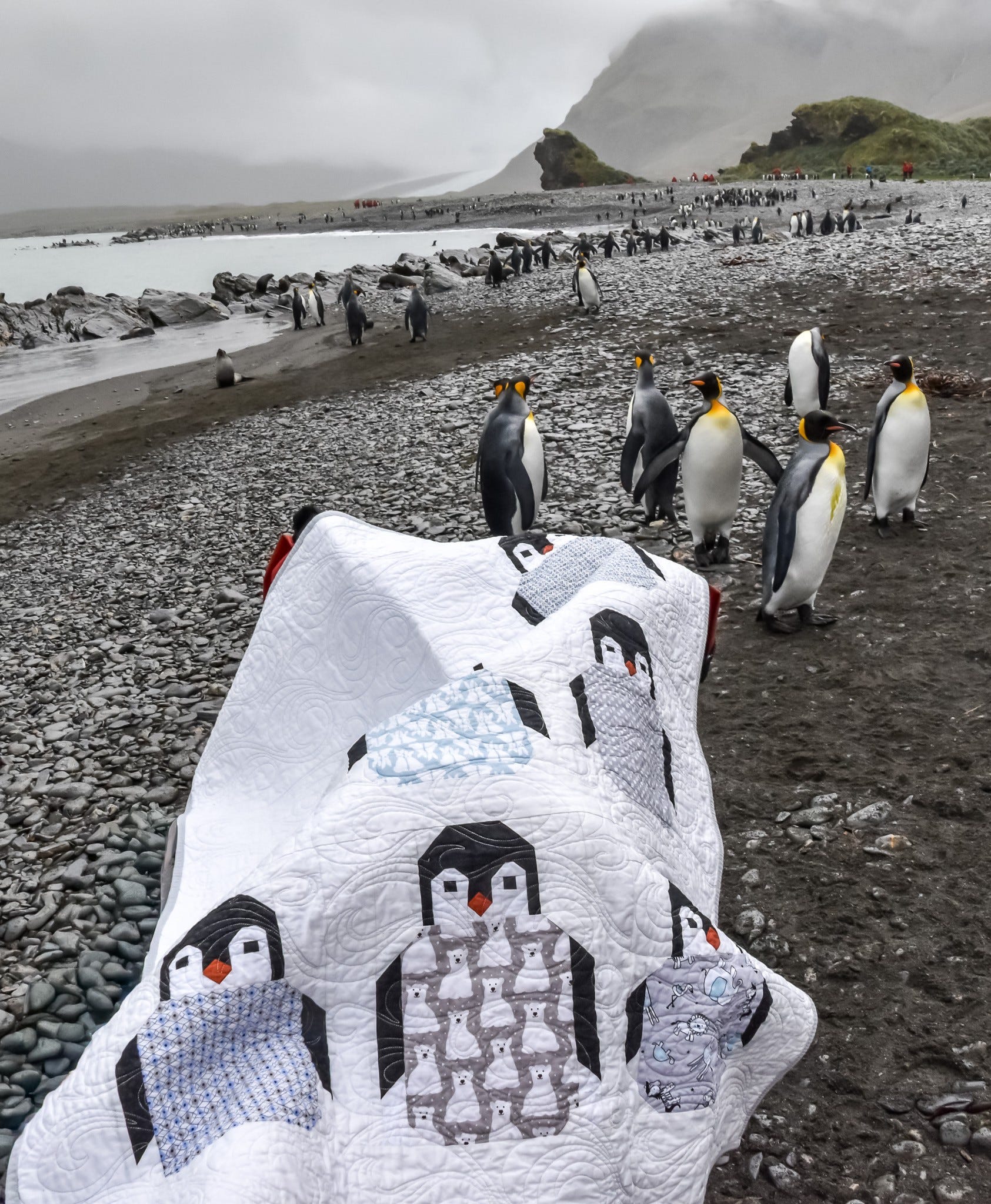
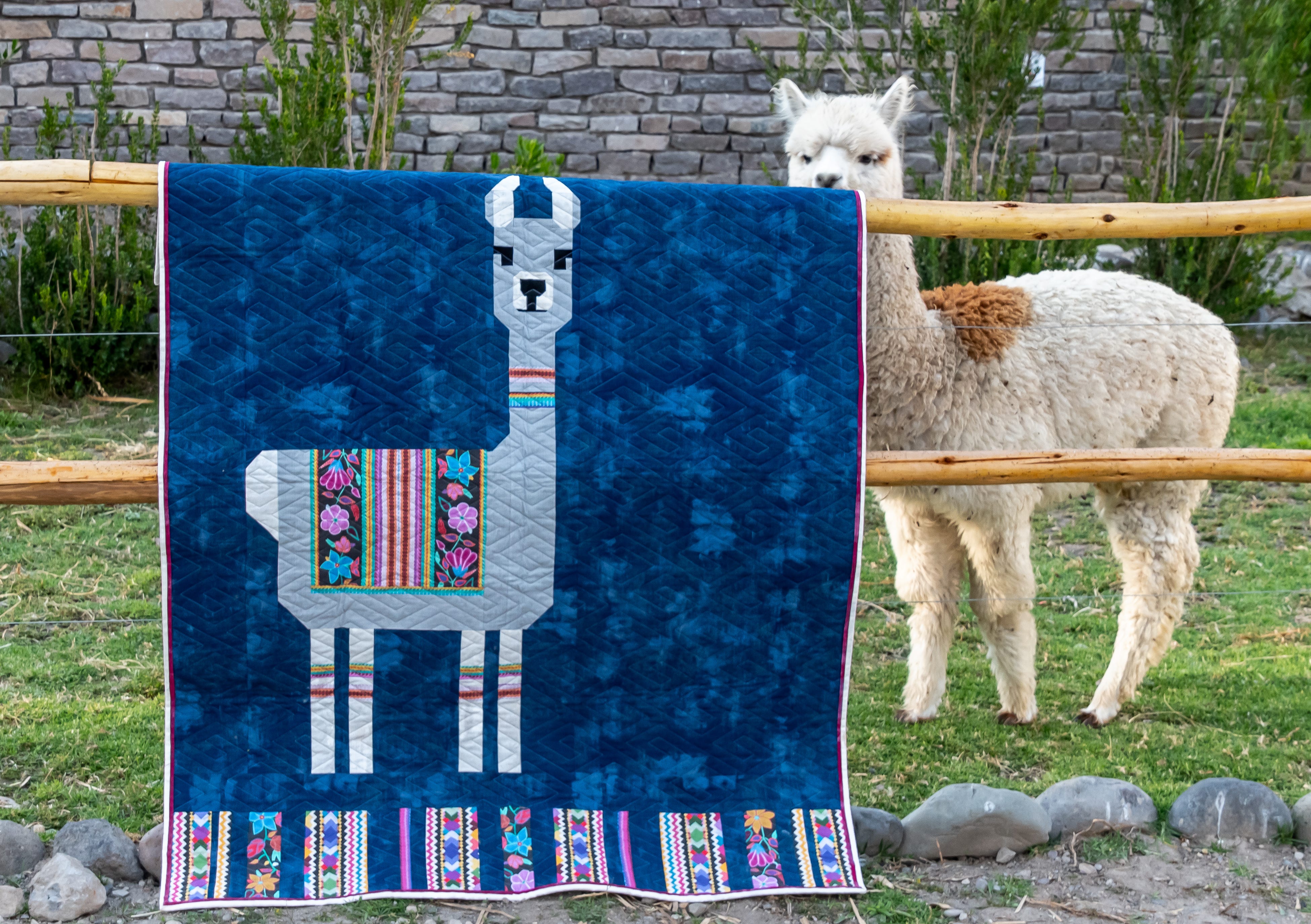
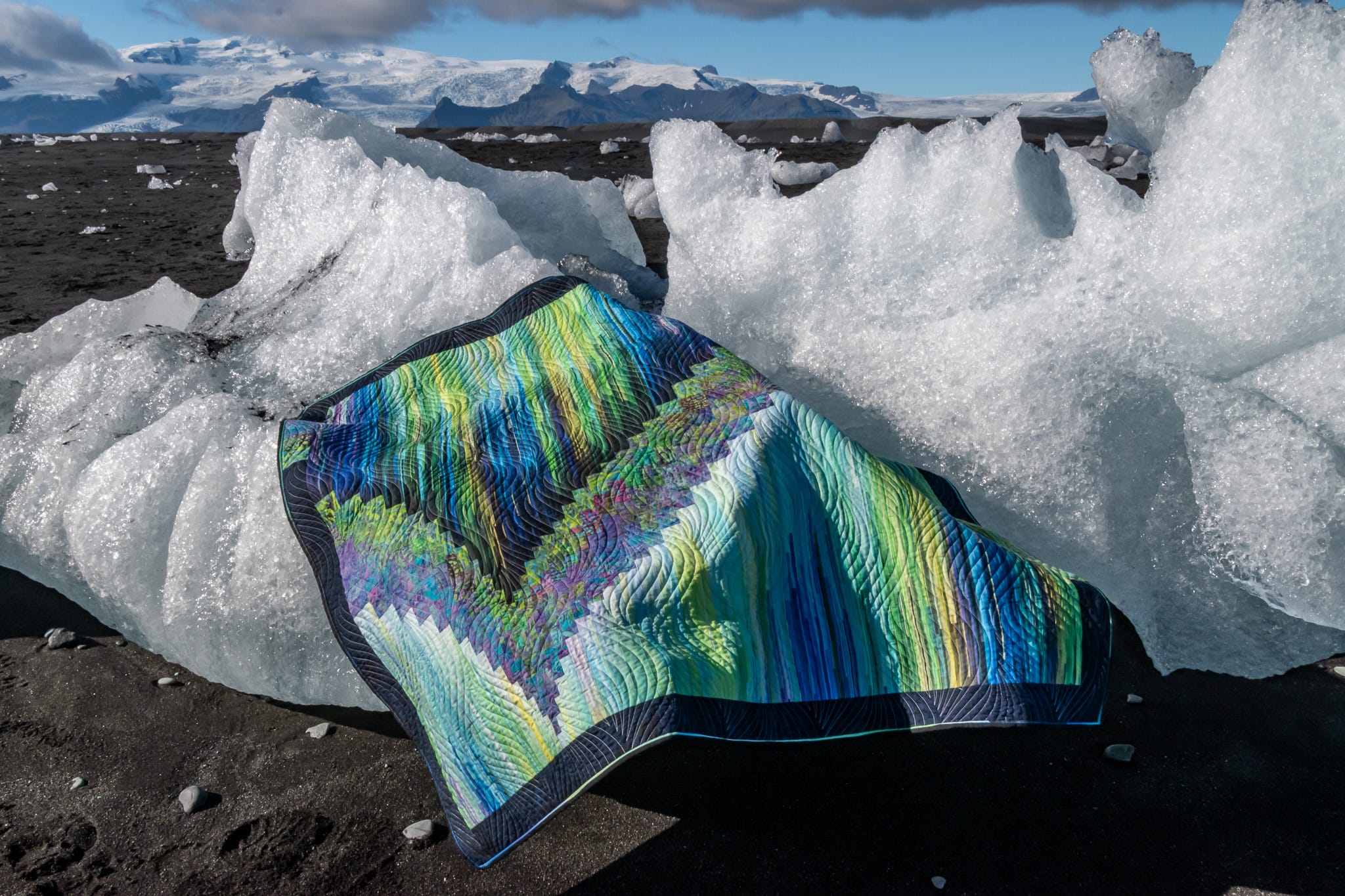
I enjoy designing and creating quilts inspired by my travel destinations. I then take my quilts with me and photograph them on location. In one quilt, I used African batik panels and then photographed it with giraffes at the Nairobi National Park, specifically at the Nairobi Giraffe Sanctuary. When going to Peru, a young llama curiously inspected my llama quilt. In Iceland, I photographed my northern lights-inspired quilt against the backdrop of huge chunks of ice that littered the photogenic Black Diamond Beach.
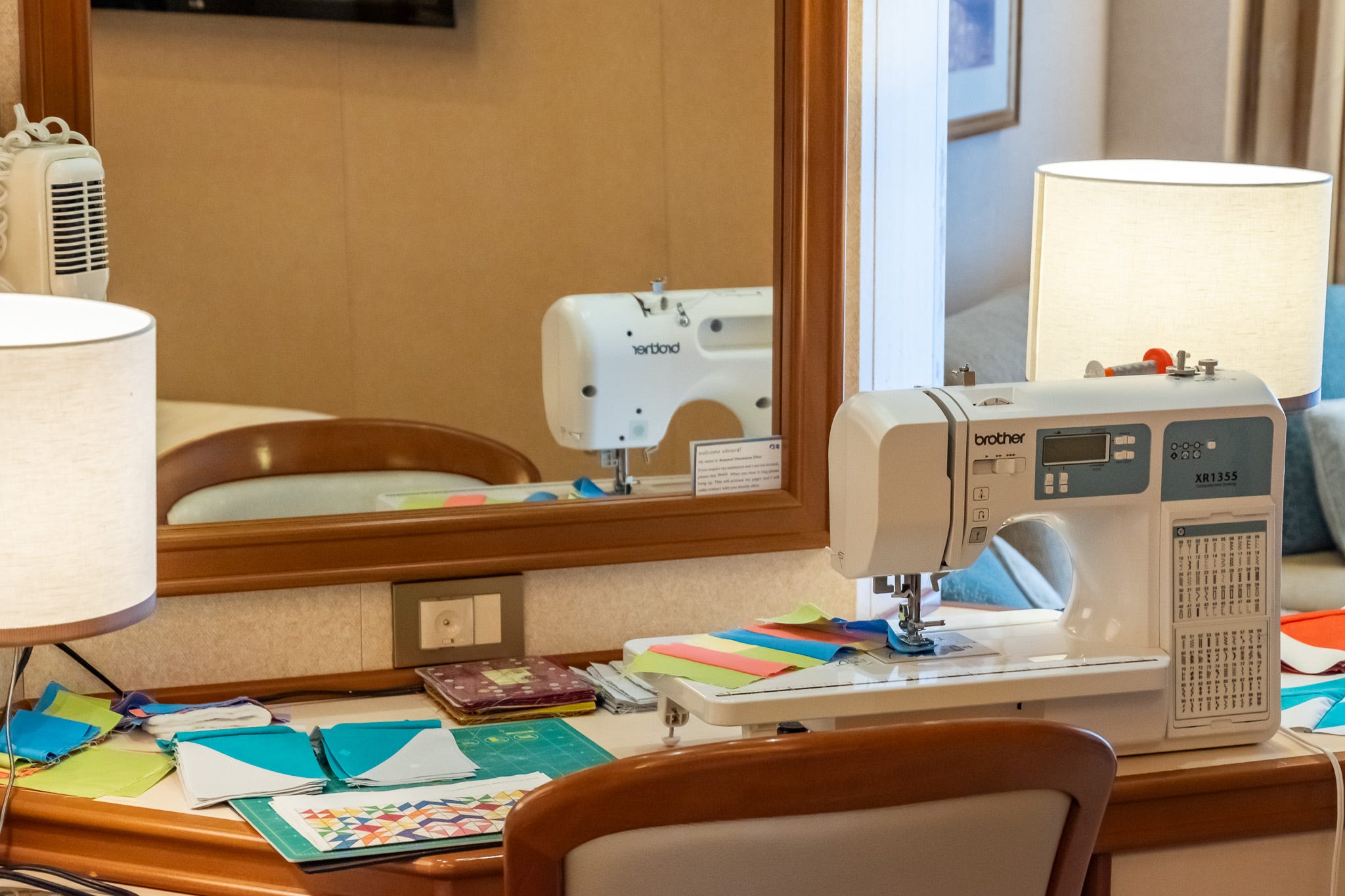
One of the easiest ways to combine travel and quilting is to take a quilting-themed cruise. These cruises provide patterns, sewing machines, and skilled instructors. Alternatively, I create my own quilting cruise. I love cruising and have been on all sizes of ships and boats across the globe. When I book a cruise with a lot of sea days, I take my sewing machine with me and use the sea days to exercise my creative side. I have a small, dedicated sewing machine that is light and fits easily into a carry-on suitcase. I precut all my fabric so that all I have to focus on while cruising is creating my masterpiece.
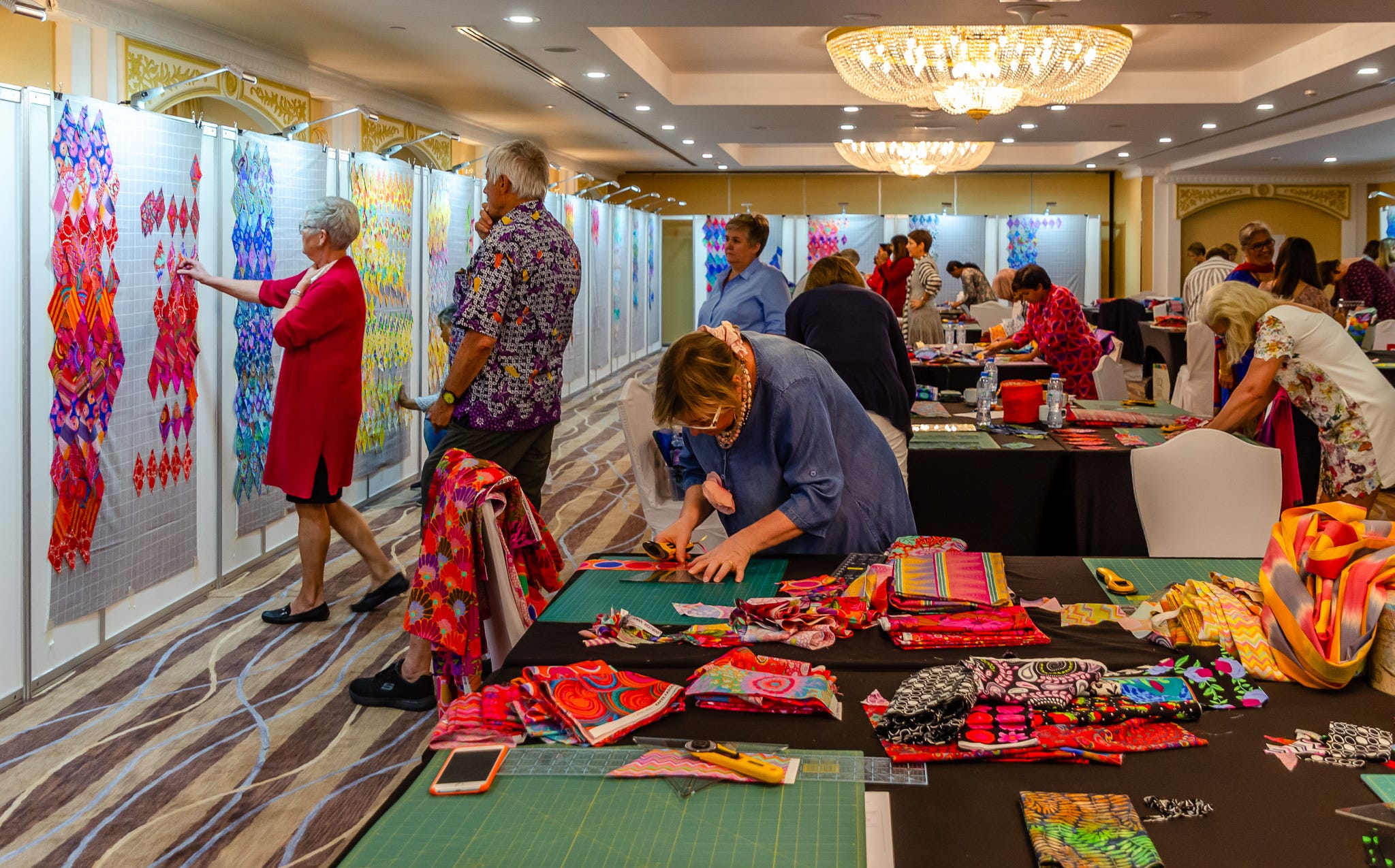
Another easy way to combine travel and quilting is to take a quilting class or quilting retreat. I have found quilting classes all across the US and also in other countries, often in very interesting places. One of my favorites is the Empty Spools Seminars in Asilomar State Park near Monterey, California. The classes bring in world-renowned teachers to this historic location that is steps away from the beach. What could be better than gorgeous sunsets after a day of quilting? In fact, I am going back again this April.
Quilt shows also have classes, and they take place all over the world. There are numerous quilt shows throughout the US, but other countries have also adopted this craft. There are major shows in Canada, England, Australia, Japan, South Africa, and India. One year, I attended a quilt show in Dubai, which was a fun excuse to visit this popular tourist destination.
I also look for quilting and fabric shops in the locations I visit. Bringing home unique fabric patterns from other parts of the world makes a fun souvenir. If I can’t find fabric, interesting tea towels, napkins, or handkerchiefs can also be incorporated into quilts.
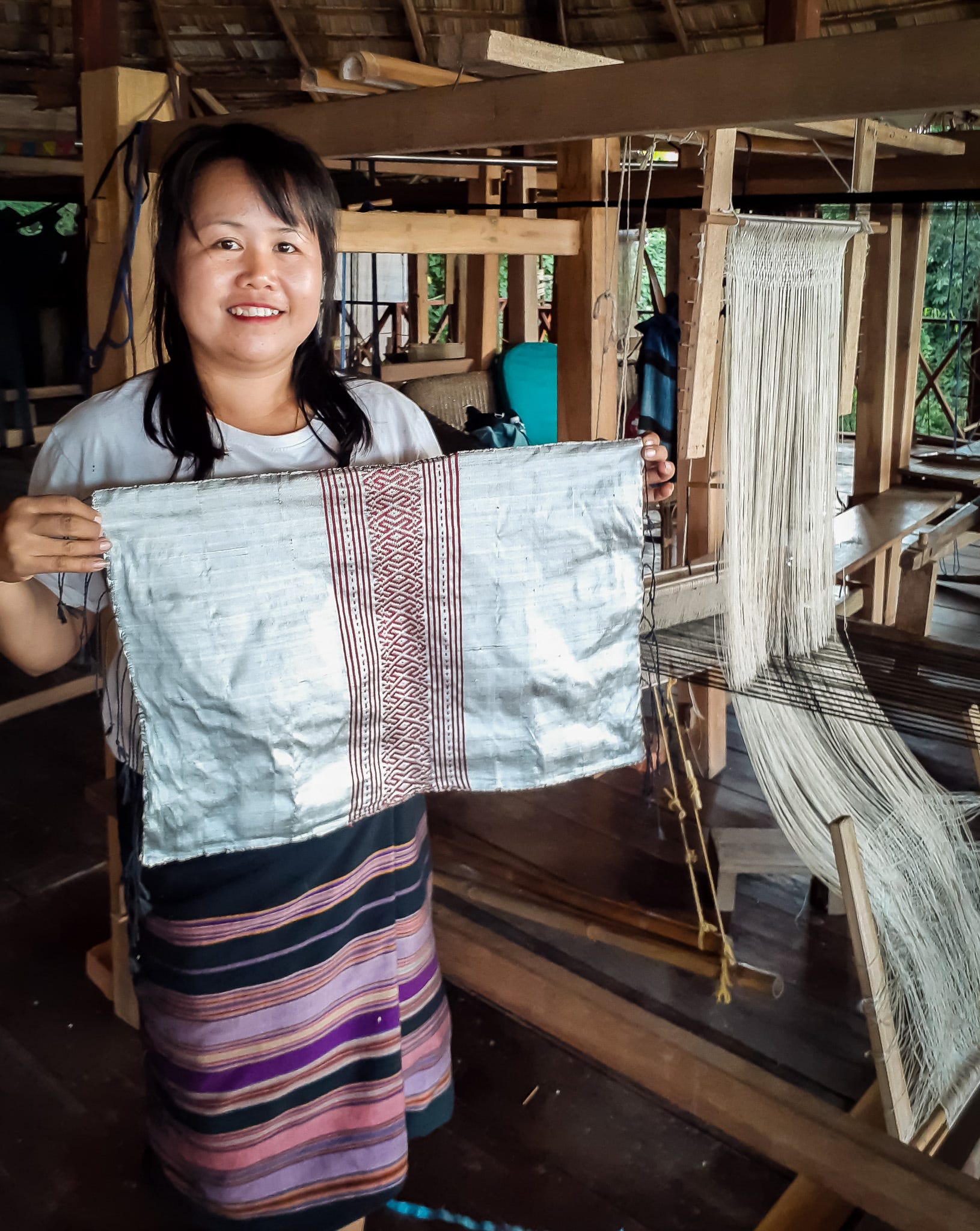
I am actually interested in almost everything textile-related and search out whatever classes I can find when I travel. In Luang Prabang, Laos, I took a weaving class at the Ock Pop Tock Living Craft Center. Through their weaving, the women of Laos earn extra money for their families. Ock Pop Tock is a fair trade resource where over 500 talented, local women can sell their handmade crafts. They also offer classes to anyone interested. For an afternoon, a weaving teacher patiently worked with me to create a lovely, small silk wall hanging. Even though she didn’t speak a lot of English, she managed to make herself understood. I left with some very special memories and a one-of-a- kind souvenir.

Japan has a very strong handicraft tradition. When I visited there, I found many textile-related classes, as well as classes in other types of traditional Japanese crafts. My two favorites were learning to make Temari balls and Sachiko embroidery.
Tamari balls are made of yarn and thread and then embroidered with very intricate geometric patterns. Historically, they were used as toys by Japanese women. Today, they are a decorative item gifted for special occasions. I found a class in Osaka that taught me the basics. Once I was home, I discovered an online class through Facebook that taught me how to make more complicated designs.
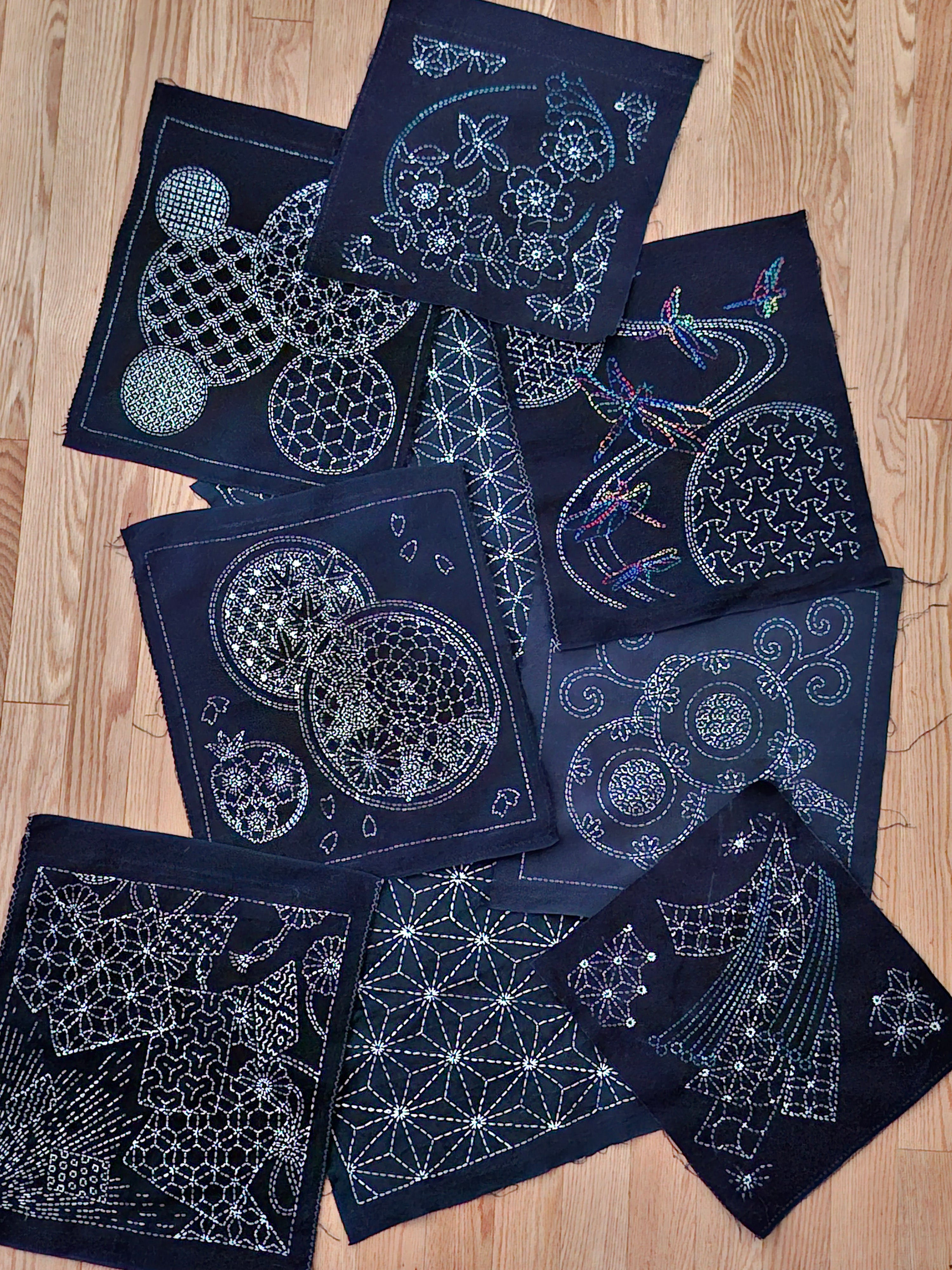
Sashiko is a traditional form of embroidery using a running stitch. It was used as a quilting method to make clothing warmer, more sturdy, and more durable. Using this simple running stitch, the Japanese have created a huge library of intricate and distinctive geometric patterns. I found a Sashiko class in the Tokyo suburbs that taught me the basics. Then, at a small fabric shop in Tokyo’s Ginza district, I found a large panel in classic indigo printed with 80 different Sashiko designs. That will keep me busy for a while.
And so began another sewing obsession. At home, I started searching for other Sashiko panels and discovered a large variety available online. Some panels were big, but many were about 12 inches square, printed with modern interpretations of the traditional sashiko designs. I found that these small squares are perfect compact travel companions that satisfy my creativity and keep my hands busy on airplanes and buses.

Another popular Japanese craft is shibori, a form of tie-dye. I took classes in this craft at the Kyoto Shibori Museum and also in Tokyo. Each time I made a scarf, though with different techniques and results.
Once again, the Japanese have taken this craft to an extreme. They take tiny little nubs of raw silk fabric and bind them tightly with thread, barely a few millimeters in size. They fill yards of fabric like this based on a predetermined design, and then dye the completed tied fabric. It takes months to make enough yardage for a silk kimono, but the results are stunning. Master kimono artist Itchiku Kubota took this art form to an extreme. I saw his exquisite examples at the Itchiku Kubota Museum in Kawaguchiko and was blown away by his artistry.
If I don’t find textile-related classes, then I look for other things that interest me. I tried a traditional marble painting class in Istanbul, which was lots of fun. Cooking classes are also a good way to connect to the local culture.
I sometimes find it difficult connecting to a culture when I visit, especially if it is a highly desirable tourist destination. I am usually surrounded by more tourists than locals and hear more English than the native language. Taking a class in something that interests me helps me connect to the culture, at least for a few hours.
Rose Palmer believes that life is a patchwork of experiences. Traveling the world is one of her deepest passions which continues to add to her ever-growing quilt of life experiences. She likes to focus her traveling lens on art, architecture, history, nature, and soft adventure with a touch of luxury. Rose shares her award-winning stories and photos on her blog www.Quiltripping.com
🧵 Browse Rose Palmer’s Quilt Patterns on Etsy: https://www.etsy.com/shop/Quiltripping
📰 Check Out the “Quiltripping Travel” Digital Podcast Magazine: https://online.fliphtml5.com/yhwzg/QUILTRIPPING-TRAVEL-WITH-ROSE-MAG/#p=1
🎧 Subscribe to the Podcast on Podbean: https://quiltrippingtravel.podbean.com/